

Roasted in Ghee
Our makhana is slow-roasted in desi ghee for a rich, clean taste.
Estd. 1975 · Patna, Bihar
One counter in Patna. A handful of recipes. And a state that has been growing the world’s makhana for longer than anyone can remember.
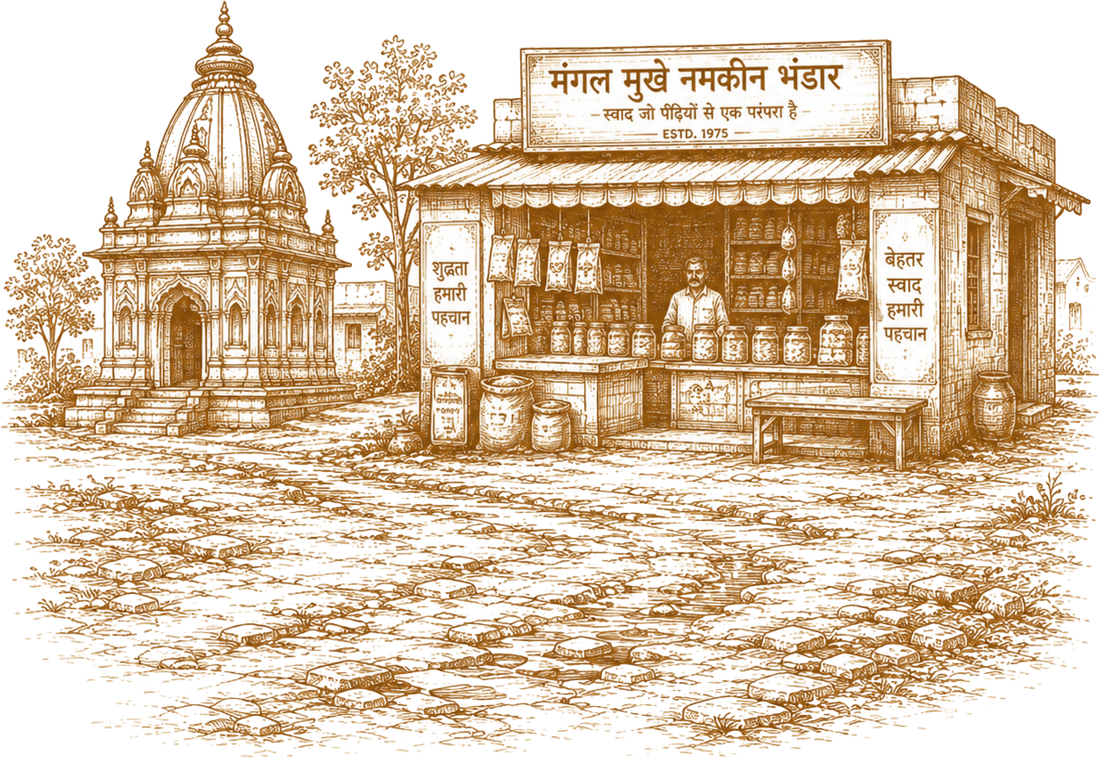
Where It Started
In 1975, Mangal Mukhe opened as a namkeen shop in Patna. There was no brand, no packaging and no plan beyond making the bhujia properly and selling it fresh.
Word travelled the way it does in Bihar — from one household to the next. People came for the bhujia and stayed for the chana dal. Festivals meant queues. Over the years the shop became the kind of place people describe by taste rather than address.
स्वाद जो पीढ़ियों से एक परंपरा है A taste that has been a tradition for generations

From the Founder
Mangal Mukhe is run today by someone who grew up around the jars, the roasting and the early mornings — and who never quite accepted that a snack this good should only be known in one city.
The work has been unglamorous: sourcing makhana that is worth the name, holding a recipe steady when a cheaper version would be easier, and insisting that what is printed on the label is exactly what is inside the jar.
The ambition is simple and stubborn — that when someone in Mumbai or Bengaluru picks up a jar of makhana, they think of Bihar. Not as a footnote. As the source.
“We are not inventing anything. We are packaging something Bihar has always done well, and refusing to cut corners on the way.” Founder, Mangal Mukhe
The Journey
The shop opens in Patna, selling freshly made namkeen over a wooden counter.
The bhujia and chana dal recipes settle into their final form. Regulars turn into generations of regulars, and the shop becomes a local fixture.
Bihar’s own harvest becomes the heart of the range — roasted rather than fried, and seasoned in three flavours built for how India snacks now.
The same recipes, sealed in food-grade jars with a full ingredient list and nutrition panel on every pack, ready to travel well beyond Patna.
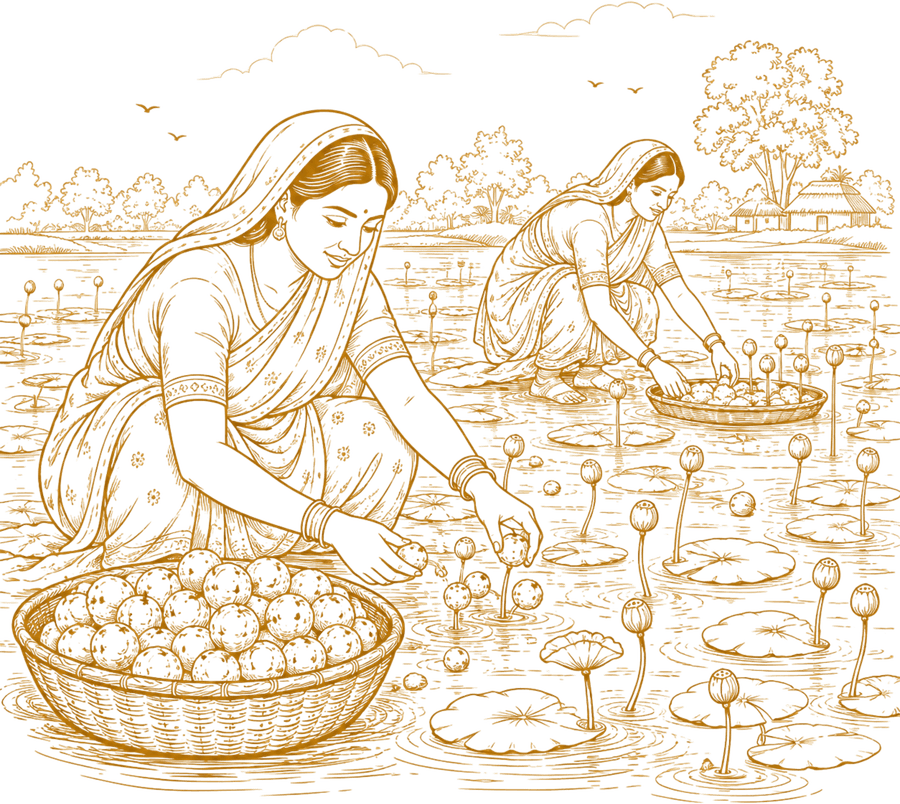
Bihar’s Own Harvest
Makhana grows in still water. In north Bihar, families wade waist-deep into lotus ponds and lift the seeds out by hand — a harvest that has never been fully mechanised because it has never needed to be.
The seeds are dried, then popped over heat until they turn white and weightless. It is one of the few Indian snacks that is naturally light before anyone does anything to it. We simply roast it well and season it honestly.
Bihar grows the overwhelming majority of India’s makhana. Carrying that from our own state to the rest of the country is the part of this business we take most seriously.
What We Stand For
Our makhana is slow-roasted in desi ghee for a rich, clean taste.
Roasted, never deep-fried — so the crunch stays light.
The same recipes our counter in Patna has used for decades.
Carefully sourced makhana, besan and chana dal. Nothing less.
Freshly made, sealed at source, honestly labelled.
The colour on your fingers comes from real masala.
Looking Ahead
More flavours, more shelves, more households — and the same recipes underneath all of it.